Why circular fibre materials need more than one pathway
At ZELLCHEMING-Expo 2026, a cross-industry workshop between textile, paper, machinery, and recycling experts showed why circular fibre materials need more than one destination.
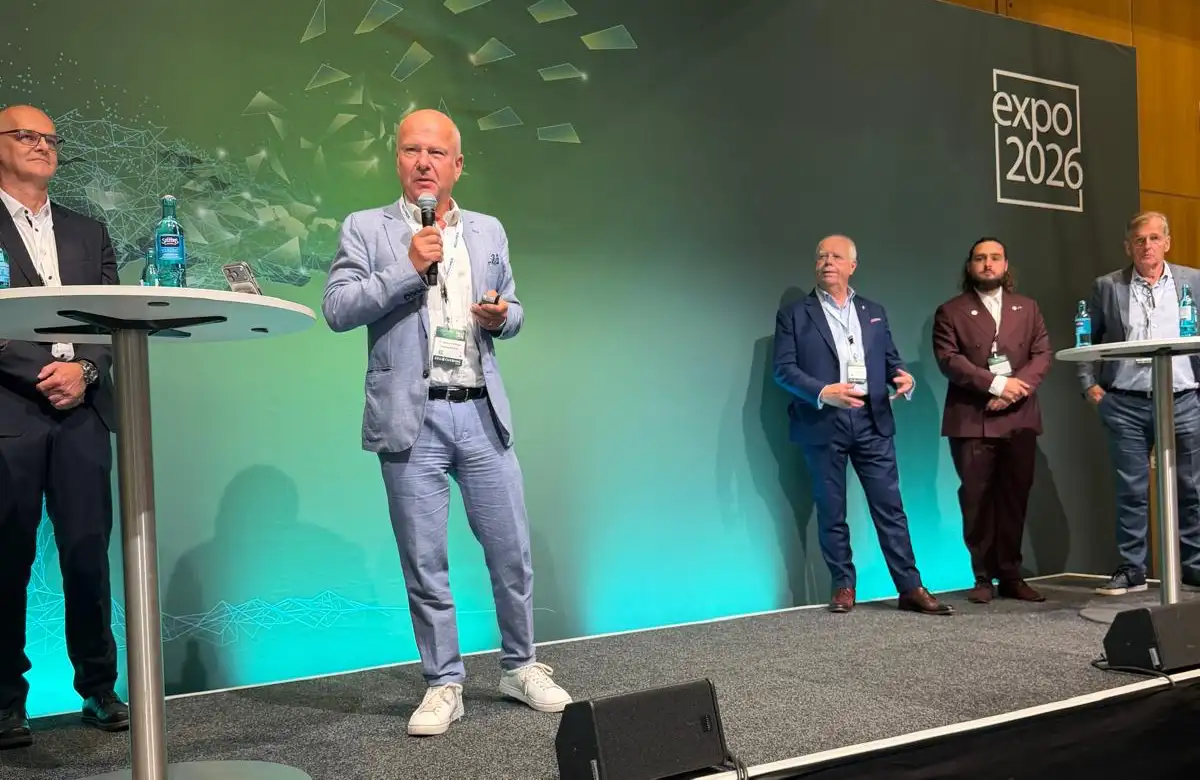
At ZELLCHEMING-Expo 2026, TexBoard joined the workshop “Fibre & Textile meets Pulp & Paper”, a cross-industry format exploring recycling synergies between the textile and paper industries.
The discussion brought together perspectives from textile recycling, pulp and paper, machinery, fibre production, and material development. The central question was not whether textile fibres can be reused. The more relevant question was where they can create the greatest value.
The fibre resource already exists
Textile waste is often discussed as a disposal problem. From a material perspective, it is also a large existing fibre resource.
Those fibres have already been produced, processed, spun, blended, dyed, finished, used, collected, and sorted. The challenge is that much of their remaining structural value is lost when recycling pathways are too narrow or too low-value.
The workshop made clear that textile-to-textile recycling is important, but it cannot be the only answer. Textile-to-paper applications may open another route for cellulose-based fibre streams. Yet many reclaimed fibres may require additional pathways where their remaining value can be preserved in new material applications.
The problem is not only technical
The discussion highlighted barriers such as fibre blends, contamination, elastane, coatings, dyes, finishes, sorting quality, short fibre lengths, cost gaps, missing business models, and the need for scalable use cases.
These challenges show why circular fibre systems cannot be solved by one sector alone.
Textile companies understand fibres and blends. Paper companies understand fibre processing and high-volume circular systems. Machinery companies understand industrial preparation and consolidation. Brands influence demand and economics. Material developers connect fibre properties with applications.
Circularity becomes industrially relevant when these capabilities are connected.
From fibre recovery to material architecture
For TexBoard, the most important insight is that reclaimed fibres should not only be measured by their origin, but by what can still be engineered from them.
TexBoard focuses on preserving and reconnecting long-fibre architecture. Instead of reducing fibres to a low-value filler, the material logic is based on fibre networks, resilience, air-rich structures, thermo-mechanical consolidation, and thermoformability.
This creates an additional pathway: from reclaimed textile fibres to engineered structural materials.
This route does not replace textile-to-textile or textile-to-paper recycling. It complements them by addressing applications where fibre architecture can create structural, lightweight, and formable material value.
One fibre resource, multiple pathways
The future of textile circularity will likely not be defined by a single recycling route.
It will require multiple pathways: textile-to-textile where fibre quality and sorting allow it, textile-to-paper where cellulose-based streams fit paper processes, and textile-to-structural-material where fibre architecture can be preserved and engineered.
This is the space TexBoard is developing.
Not as a single product, but as a material platform for circular structural applications.
What comes next
The ZELLCHEMING workshop showed strong interest in cross-industry collaboration. It also showed that the next step is practical: defining use cases with enough technical relevance, volume, and economic logic to justify real pilot projects.
For TexBoard, this means continuing to develop applications where reclaimed textile fibres are not downcycled, but transformed into resilient, thermoformable, structural materials.
The fibres already exist. The industrial technologies already exist. The question is how much value we can preserve.
If you are working on textile recycling, fibre preparation, nonwoven technologies, structural materials, or industrial applications for reclaimed fibres, we would be happy to continue the conversation.